
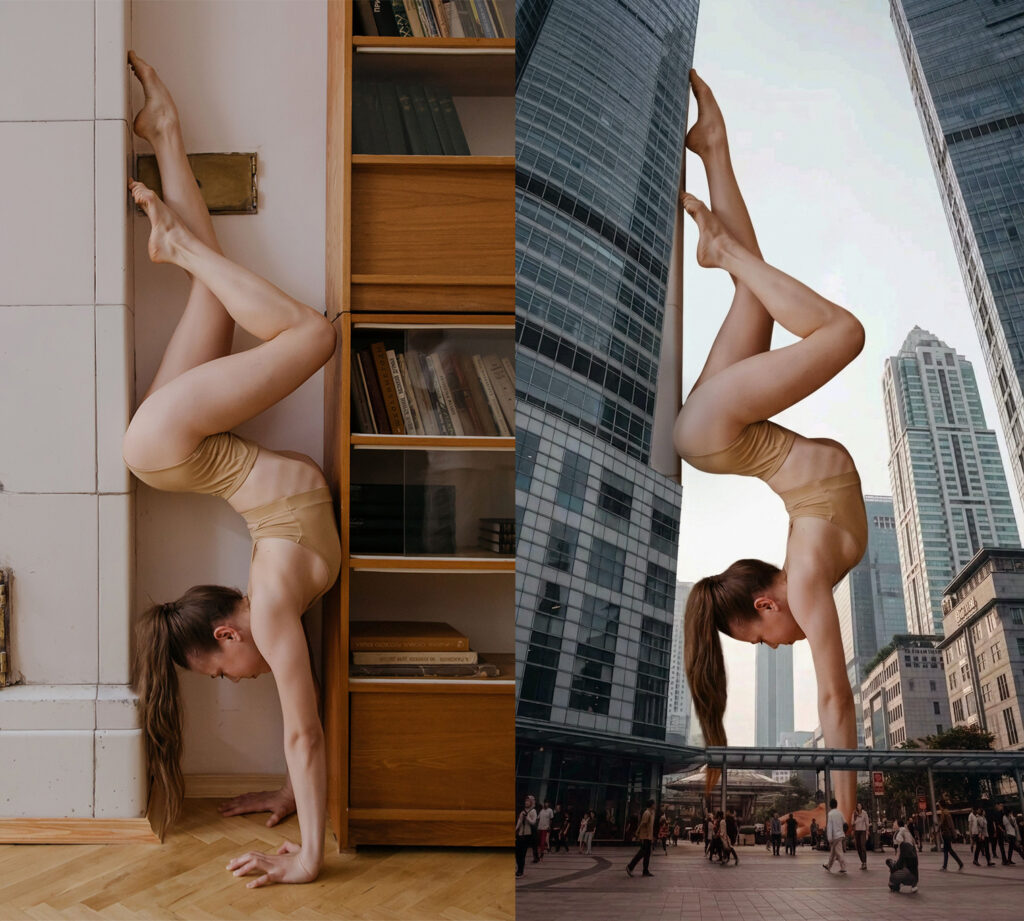
Transforming a simple photo into a completely new scene, changing a part of a photo, creating a realistic composition by combining multiple photos, or digitally presenting an imaginary scene as if it were real—these are important parts of Photo Manipulation . While photo manipulation has long been done using professional editing software like Adobe Photoshop, Artificial Intelligence (AI), machine learning, and automation are rapidly changing this field.
The Future of Photo Manipulation is not just a discussion of new Photoshop features. It is an important idea about how people will create, edit, and represent digital reality in the future. Advances in technology have made photo manipulation faster, easier, and more sophisticated than ever before. At the same time, realistic manipulated images are raising new questions about authenticity, misinformation, and ethical photo editing.
The future of photo editing will see human creativity and artificial intelligence working together. AI can quickly complete many repetitive editing tasks, but the role of a skilled photo editor will remain crucial in terms of creative concept, visual storytelling, artistic judgment, and meeting the client’s specific requirements.
Photo Manipulation?
Photo Manipulation is the process of creating a new image by changing, adding, removing, or combining various visual elements of a photograph. This can include changing the background of a photo, removing unwanted people or objects, changing colors, adjusting lighting, reshaping the body, retouching faces, or compositing multiple photographs.
In professional photo manipulation, just using an editing tool is not enough. Perspective, lighting, shadows, colors, proportions and image composition have to be properly matched. A good manipulation should be such that the natural relationship between the different parts of the image is maintained.
Currently, photo manipulation is widely used in advertising, fashion, wedding photography, e-commerce, product photography, entertainment, digital art, and social media content creation.
Current status of Photo Manipulation
Photo manipulation was once a very time-consuming task. An editor had to perform many editing tasks manually. Tasks like selection, masking, background removal, color correction, shadow creation, and compositing required a lot of skill and time to complete.
Modern Photoshop and other advanced photo editing software have made these tasks much easier. Professional editors can create complex images using advanced selection tools, layer masks, blending modes, adjustment layers, and retouching features.
With the addition of AI-powered editing tools, the workflow has become faster. Technologies like automatic object selection, background removal, image enhancement, and generative editing are changing the traditional workflow of photo manipulation.
This change is expected to accelerate in the future.
How will AI change the future of photo manipulation?
Artificial Intelligence is one of the most important technologies for the future of photo manipulation. AI is able to recognize different parts of an image, change them, and create new visual elements based on human instructions.
Previously, editors had to manually create a path or selection to select an object. In the future, AI will be able to quickly identify the subject, background, and individual objects and prepare them for editing.
Using AI will also make tasks easier, such as:
- Change background
- Remove unwanted object from photo
- Enhance image quality
- Changing Lighting
- Sky replacement
- Photo restoration
- Portrait retouching
- Object selection
- Creative compositing
- Image expansion
This will reduce the technical workload of the photo editor and free up more time for creative work.
However, images created or modified by AI do not always guarantee professional quality. Human supervision is still very important in cases of complex composition, realistic lighting, accurate perspective and natural details.
What is the future of Photoshop?
Adobe Photoshop has long been one of the most important software for professional photo editing. Photoshop’s role in the future of photo manipulation may change even more.
In the future, Photoshop’s editing workflow is likely to become more intelligent and automated. Instead of manually giving many technical instructions, the editor may be able to use natural language to provide editing directions.
For example, an editor might say that a portrait needs to be changed to create a sunset environment by changing the background, giving the subject natural warm light, and matching the subject with the perspective and depth of the background.
While AI can complete a large portion of the technical editing, final creative control will remain in the hands of the editor.
This could make the future of Photoshop a powerful combination of human creativity + AI assistance
Human Creativity vs Artificial Intelligence
AI can speed up photo manipulation, but it’s difficult to be a complete substitute for creativity.
A professional photo editor or digital artist doesn’t just follow the commands of the software. He or she makes decisions about the mood, story, composition, and visual impact of a photo.
Let’s say a client wants to create a fantasy artwork. AI might be able to create an image in a matter of seconds. But it may require human creative judgment to create the image according to the client’s brand identity, desired composition, specific subject appearance, and exact visual style.
Therefore, collaboration between AI and human editors will be more important than competition in the future photo manipulation industry.
AI will do repetitive work and humans will make creative decisions—such a workflow could become more popular.
New Possibilities for Creative Photo Manipulation
The future of photo manipulation will create countless new possibilities for digital artists.
An artist can use a simple photograph to create a completely imaginative environment. It will be possible to create new types of artwork by combining real architecture, digital objects, atmospheric effects, dramatic lighting and fantasy elements.
In particular:
- Digital art
- Concept art
- Advertising
- Movie poster
- Fashion campaign
- Album artwork
- Social media design
- Surreal photography
- Fantasy artwork
In these cases, the use of creative photo manipulation may increase further.
The easier the technology becomes, the greater the opportunity to implement creative ideas.
The Future of Realistic Image Manipulation
One of the biggest changes of the future could be photorealistic image manipulation .
Today, skilled editors can create highly realistic composites using lighting, shadows, reflections, perspective, and texture. AI technology can further enhance this realism.
Tasks such as automatically matching the lighting of an edited image’s subject and background, creating realistic shadows, or creating reflections based on the surface of an object may become more automated in the future.
This will make it possible to create images that can be difficult for the average viewer to tell whether they are real photographs or digitally manipulated images.
This is where the ethical challenges of photo manipulation become important.
Photo Manipulation And Ethical Challenges
With the advancement of photo manipulation, ethics in photo editing is becoming an important issue.
Image manipulation may be normal in creative artwork or advertising. But if an edited photograph is presented as a real event and misleads the viewer, it can create serious problems.
In particular:
- News photography
- Political content
- Social media
- Product advertising
- Documentary photography
- Public events
In these cases, manipulated images can affect people’s perception.
Editing transparency may become even more important for professional editors and content creators in the future. It will be important to understand the difference between where creative manipulation has been used and where authentic photographs are required.
The Future of Photo Manipulation on Social Media
Social media has already seen a surge in the popularity of photo manipulation. Attractive images on Instagram, Pinterest, Facebook, and other visual platforms capture people’s attention.
In the coming days, it will be possible to create more sophisticated social media visuals using AI and advanced editing tools.
Content creators are very fast:
- Portrait enhance
- Background change
- Color grading
- Creative effects
- Object removal
- Image compositing
You can do it.
However, excessive retouching and unrealistic appearance can also lead to debates about people’s beauty standards. Therefore, in future photo editing, it will be important to maintain authenticity while creating attractive images.
Photo Manipulation in the Advertising Industry
The advertising industry is one of the biggest users of photo manipulation.
To make a product photograph more attractive, the background, lighting, colors, reflections, and composition are changed. In the future, AI-assisted photo manipulation will make this task even faster.
It may be possible to quickly create versions of a product for different environments. It will be easy to create different visuals for different markets, seasons, or campaigns from the same product image.
However, it will also be important not to mistakenly alter important characteristics of the product in the commercial image.
The Future of E-commerce Photography
The demand for photo manipulation may also increase in the e-commerce industry.
Online shoppers rely heavily on high-quality images when viewing products. So clean backgrounds, accurate colors, realistic shadows, and professional presentation are very important.
Using AI-assisted editing, e-commerce businesses will be able to quickly process thousands of product images.
However, it should not create misleading representations about the actual color, size, or features of the product. Both accuracy and visual quality will be important in the future of e-commerce photo editing.
Wedding And Portrait Photo Editing
Wedding photography also uses photo manipulation and advanced retouching. Wedding photographs can be used to remove unwanted people or objects, enhance the background, adjust lighting, and do portrait retouching.
Even if AI can quickly perform repetitive corrections in the future, the creative judgment of a human editor will remain important in maintaining the emotional character of wedding photographs.
A skilled editor’s goal is not just to perfect the photograph; but to capture the natural beauty and emotion of the special moment.
Will the role of professional photo editors diminish?
Many people believe that the need for professional photo editors will decrease in the future due to the advancement of AI. But in reality, the nature of editing is more likely to change.
The professional editor of the future will not only rely on traditional Photoshop techniques. He will also need to be proficient in AI tools, automation, and advanced compositing techniques.
A successful Photoshop expert might use AI to do quick initial editing, then improve the final image through manual adjustments and creative direction.
This means that the value of a future editor will depend not only on software knowledge, but also on creative thinking, problem solving, visual judgment, and technology adaptation .
The future of learning Photo Manipulation
The way we learn photo manipulation is also changing. Previously, learning Photoshop required a long time of manually practicing various tools. Now, thanks to online tutorials, courses, and AI-assisted learning, beginners can quickly learn basic techniques.
However, fundamentals are still important to move to the professional level.
An aspiring photo editor should:
- Learning the basic tools of Photoshop.
- Understand layers and masks well.
- Learn color correction and color grading.
- Getting an idea about lighting and shadows.
- Perspective ও composition practice করা।
- Learn advanced compositing.
- Learning to use AI editing tools.
- Be aware of ethical photo manipulation.
- Create your own portfolio.
- Regularly learning about new editing technology.
Will Automation Make Photo Editing Easier?
Yes, automation could be an important part of the future photo editing workflow.
If the same repetitive task has to be performed on hundreds of photographs, automation can save the editor a lot of time. Batch processing, automatic masking, intelligent retouching, and AI-based enhancement can increase the efficiency of the workflow.
As a result, professional editors can focus more on creative and complex work instead of technical repetition.
Photo Manipulation – Future Trends
A few trends may be particularly important in the photo manipulation industry in the coming years.
1. AI-Powered Editing
AI photo editing will become more sophisticated and complete routine tasks faster.
2. Generative Image Editing
The use of generative technology to modify or expand the content of existing photographs may increase.
3. Faster Workflow
In addition to manual editing, automation will speed up professional workflow.
4. Hyper-Realistic Compositing
It will be possible to match lighting, shadows, texture, and perspective more accurately.
5. Human-AI Collaboration
AI will do the technical work, and human editors will do creative direction and quality control.
6. Greater Demand for Authenticity
Transparency may become increasingly important in distinguishing between manipulated and authentic images.
7. Personalized Visual Content
It will be possible to quickly customize the same image according to different audiences or campaigns.
Will future photo manipulation surpass Photoshop?
Although Photoshop is a powerful editing platform, future photo manipulation will not be limited to just one software.
Cloud-based tools, AI platforms, 3D software, generative technology and other digital creative tools can be used together.
A designer might do compositing in Photoshop, create image elements with AI tools, and add 3D objects or advanced effects using other software.
This means that the workflow of the future will be more interconnected and technology-driven.
The Future of Photo Manipulation: Opportunity or Challenge?
The future of photo manipulation is both a great opportunity and a challenge.
The opportunity is—creative professionals will be able to create more sophisticated visuals faster. Small businesses will also have the opportunity to create professional-looking content. Photographers and designers will be able to offer new types of services.
The challenge is that AI-generated misinformation, copyright concerns, fake images, and problems with authenticity may increase.
Therefore, it is important to follow responsible editing practices in addition to using technology.
How can a Photo Editor prepare for the future?
To become a future-ready photo editor, it’s not enough to just learn Photoshop. An editor needs to know both traditional editing and modern technology.
Photoshop skills + AI tools + Creative thinking + Professional communication + Ethical awareness — this combination can be powerful for the future.
Understanding the client’s requirements, choosing the right editing approach, creating realistic results, and delivering high-quality images within deadlines will be important skills for a professional editor.
Conclusion
The Future of Photo Manipulation is a rapidly changing chapter in technology and creativity. AI, Photoshop, automation, and advanced image-editing technology are making photo manipulation faster, more intelligent, and more accessible.
But no matter how advanced the technology, human creativity, imagination and visual judgment will remain important. AI may help select a photograph, change the background or speed up complex editing tasks; but the human role in determining the purpose, emotion and creative direction of an image will remain important.
The future of photo manipulation will likely be based on a collaboration between human creativity and artificial intelligence . Professional photo editors who embrace new technology while maintaining traditional Photoshop skills and creative thinking will be the ones who will be able to stay ahead of this changing industry.
The future of photo manipulation is not just about creating more realistic images. It is about moving towards a time when an idea can be transformed into visual reality quickly, accurately, and creatively .